In a world where data is king, Hybrid Cloud Architecture emerges as a scientific symphony of flexibility and control—blending public and private clouds into a seamless, intelligent ecosystem that adapts to business rhythms like a living organism.
What Is Hybrid Cloud Architecture?

Hybrid Cloud Architecture is not just a buzzword; it’s a transformative IT model that integrates private cloud infrastructure with public cloud services, connected through secure, orchestrated networks. This architecture enables data and applications to move fluidly between environments, offering businesses the agility of the public cloud and the control of on-premises systems.
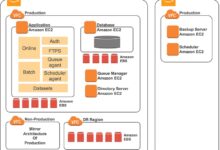


Definition and Core Components
At its core, Hybrid Cloud Architecture combines at least one private cloud and one public cloud (like AWS, Microsoft Azure, or Google Cloud Platform) with a standardized technology that allows data and application portability. Key components include virtualized computing resources, unified management tools, secure networking (often via APIs or middleware), and identity management systems.
Private Cloud: Dedicated infrastructure for a single organization, hosted on-premises or by a third party.Public Cloud: Shared infrastructure managed by a cloud service provider, accessible over the internet.Integration Layer: The glue that connects both environments—often using APIs, containers, or hybrid management platforms.”The hybrid cloud is not a destination; it’s a journey toward operational resilience and innovation.” — Red Hat, 2023 State of Enterprise Open Source ReportHow It Differs From Public and Private CloudsUnlike a pure public cloud model, where all resources are hosted externally, or a private cloud, which is fully internal, Hybrid Cloud Architecture offers a balanced approach..
It allows organizations to keep sensitive data in a secure private environment while leveraging the scalability of public clouds for non-sensitive workloads..
For example, a financial institution might store customer transaction records in a private cloud for compliance, while using a public cloud to run customer-facing mobile apps during peak traffic periods. This dynamic allocation is impossible in single-cloud models.
Key Drivers Behind the Rise of Hybrid Cloud Architecture
The surge in Hybrid Cloud Architecture adoption isn’t accidental. It’s fueled by evolving business needs, technological advancements, and regulatory landscapes. Organizations are no longer satisfied with rigid IT infrastructures that can’t scale or adapt quickly.
Business Agility and Scalability
In today’s fast-paced markets, companies must respond instantly to demand fluctuations. Hybrid Cloud Architecture enables rapid scaling of computing resources during traffic spikes—such as holiday sales or product launches—without over-investing in permanent infrastructure.
For instance, an e-commerce platform can scale its web servers on AWS during Black Friday while keeping its inventory database in a private data center. This elasticity reduces costs and improves customer experience.
- On-demand resource provisioning
- Auto-scaling based on real-time usage
- Reduced time-to-market for new services
Data Sovereignty and Regulatory Compliance
With regulations like GDPR, HIPAA, and CCPA, organizations must ensure data is stored and processed in compliant jurisdictions. Hybrid Cloud Architecture allows companies to maintain sensitive data in private or region-specific clouds while using public clouds for less regulated operations.
A healthcare provider, for example, can store patient records in a HIPAA-compliant private cloud while using a public cloud for AI-driven diagnostic tools that process anonymized data. This separation ensures compliance without sacrificing innovation.
Core Components of Hybrid Cloud Architecture
A successful Hybrid Cloud Architecture isn’t just about connecting two clouds—it’s about creating a unified, manageable, and secure environment. This requires several foundational components working in harmony.
Unified Management and Orchestration Tools
Managing multiple cloud environments manually is inefficient and error-prone. Unified management platforms like VMware vRealize, Red Hat OpenShift, or Microsoft Azure Arc provide centralized control over both private and public resources.
These tools enable IT teams to monitor performance, deploy applications, and enforce policies across clouds from a single dashboard. Orchestration engines like Kubernetes automate workload placement, scaling, and failover, ensuring optimal resource utilization.
- Centralized monitoring and logging
- Policy-based automation
- Multi-cloud cost management
Secure Connectivity and Networking
Secure, low-latency connectivity is the backbone of Hybrid Cloud Architecture. Technologies like Virtual Private Networks (VPNs), Direct Connect (AWS), ExpressRoute (Azure), and Cloud Interconnect (Google) establish private links between on-premises data centers and public clouds.
These connections bypass the public internet, reducing exposure to threats and ensuring consistent performance. Software-Defined Networking (SDN) further enhances flexibility by enabling dynamic network configuration across hybrid environments.
“Without secure, reliable connectivity, hybrid cloud is just a collection of isolated islands.” — Gartner, 2022
Identity and Access Management (IAM)
Consistent identity management is critical in hybrid environments. IAM systems like Azure Active Directory, Okta, or AWS IAM allow users to authenticate once and access resources across both private and public clouds—enabling true single sign-on (SSO).
Role-based access control (RBAC) ensures that employees only access data and applications relevant to their roles, reducing the risk of insider threats. Multi-factor authentication (MFA) adds an extra layer of security.
Benefits of Hybrid Cloud Architecture
The strategic advantages of Hybrid Cloud Architecture extend far beyond cost savings. It empowers organizations to innovate faster, respond to disruptions, and maintain control over their digital destiny.
Cost Optimization and Resource Efficiency
One of the most compelling benefits of Hybrid Cloud Architecture is financial flexibility. Instead of investing heavily in on-premises hardware that may sit idle, companies can use public clouds for variable workloads and reserve private infrastructure for steady-state operations.
For example, a media company might use its private cloud for daily content editing but burst into AWS for video rendering during peak production. This “pay-as-you-go” model reduces capital expenditure (CapEx) and shifts it to operational expenditure (OpEx).
- Eliminates over-provisioning
- Enables dynamic resource allocation
- Reduces energy and maintenance costs
Enhanced Security and Data Control
Contrary to the myth that public clouds are less secure, Hybrid Cloud Architecture often improves overall security posture. Sensitive data remains in the private cloud with full administrative control, while public cloud providers offer advanced threat detection, DDoS protection, and encryption at rest and in transit.
Additionally, hybrid setups allow for data segmentation—critical systems are isolated, reducing the attack surface. In the event of a breach, containment is easier, minimizing damage.
Disaster Recovery and Business Continuity
Hybrid Cloud Architecture is a cornerstone of modern disaster recovery (DR) strategies. By replicating critical data and applications to a public cloud, organizations can achieve near-instant failover during outages.
For instance, a bank can run its core banking system in a private data center and maintain a mirrored environment in Azure. If the primary site fails, traffic is automatically rerouted to the cloud instance, ensuring uninterrupted service.
According to a 2023 IBM study, companies using hybrid cloud for DR reduced recovery time objectives (RTO) by up to 70% compared to traditional tape-based systems.
Challenges and Risks in Hybrid Cloud Architecture
Despite its advantages, Hybrid Cloud Architecture introduces complexity that can lead to operational and security challenges if not managed properly.
Integration Complexity and Skill Gaps
Integrating disparate systems—each with different APIs, management consoles, and security models—requires deep technical expertise. Many organizations struggle with a lack of skilled personnel who understand both on-premises and cloud-native technologies.
A 2023 survey by Flexera found that 62% of enterprises cite skills shortages as a major barrier to hybrid cloud success. Without proper training or hiring, IT teams may face configuration errors, performance bottlenecks, or security misconfigurations.
- Diverse toolsets increase learning curves
- Lack of standardized processes across clouds
- Difficulty in troubleshooting cross-cloud issues
Data Latency and Performance Bottlenecks
When data must travel between private and public clouds, latency can become an issue—especially for real-time applications like financial trading or IoT systems. Network congestion, suboptimal routing, or insufficient bandwidth can degrade performance.
To mitigate this, organizations must invest in high-speed connections, edge computing, or caching strategies. For example, placing frequently accessed data in a public cloud cache reduces the need for constant cross-cloud queries.
Security and Compliance Risks
While hybrid clouds can enhance security, they also expand the attack surface. Misconfigured firewalls, unpatched systems, or weak access controls in either environment can be exploited.
Additionally, compliance becomes more complex when data moves across jurisdictions. A company using AWS in Ireland and a private cloud in California must ensure both environments meet GDPR requirements, which can be challenging without automated compliance tools.
“The hybrid cloud security model must be proactive, not reactive.” — NIST Special Publication 800-144
Hybrid Cloud Architecture Models and Deployment Patterns
There is no one-size-fits-all approach to Hybrid Cloud Architecture. Organizations choose deployment models based on workload requirements, data sensitivity, and business goals.
Cloud Bursting
Cloud bursting is a model where applications run in a private cloud or data center under normal conditions but “burst” into the public cloud during peak demand. This is ideal for seasonal businesses like retail or ticketing platforms.
For example, a concert ticketing site might handle regular traffic on its private servers but automatically scale into AWS during a major artist’s ticket release. This prevents system crashes and ensures a smooth user experience.
- Cost-effective for unpredictable workloads
- Requires real-time monitoring and auto-scaling
- Depends on low-latency connectivity
Data Residency and Compliance-Driven Models
In this model, data is stored in specific locations to meet legal or regulatory requirements. For instance, a multinational bank may store EU customer data in a private cloud within Europe while using a public cloud in the US for global analytics.
This approach ensures compliance with data sovereignty laws while enabling cross-border insights through anonymized or aggregated data processing.
Hybrid Cloud with Edge Computing
As IoT and 5G expand, edge computing is becoming integral to Hybrid Cloud Architecture. In this model, data is processed at the network edge (e.g., in factories or retail stores) and only essential data is sent to the central hybrid cloud for analysis.
A manufacturing plant might use edge devices to monitor machine health in real time, sending alerts locally, while uploading aggregated performance data to a public cloud for predictive maintenance analytics.
Best Practices for Implementing Hybrid Cloud Architecture
Successfully deploying Hybrid Cloud Architecture requires strategic planning, robust governance, and continuous optimization.
Assess Workload Requirements
Not all workloads are suitable for hybrid environments. Begin by classifying applications based on sensitivity, performance needs, and compliance requirements.
Use a workload assessment framework to determine which apps should stay on-premises (e.g., legacy ERP systems) and which can move to the public cloud (e.g., collaboration tools). Tools like AWS Migration Hub or Azure Migrate can assist in this analysis.
Choose the Right Hybrid Cloud Platform
Select a platform that supports interoperability, automation, and security. Leading options include:
- VMware Cloud Foundation: Ideal for organizations already using VMware virtualization.
- Microsoft Azure Arc: Enables management of on-premises, multi-cloud, and edge resources from Azure.
- Red Hat OpenShift: A Kubernetes-based platform for building and deploying hybrid cloud applications.
Each platform offers different strengths, so align your choice with existing IT investments and long-term goals.
Implement Strong Governance and Monitoring
Establish clear policies for data access, resource allocation, and cost management. Use cloud management platforms (CMPs) to enforce governance rules and track usage across environments.
Continuous monitoring with tools like Datadog, Splunk, or Dynatrace helps detect performance issues, security threats, and cost overruns in real time. Set up alerts for abnormal activity, such as unexpected data transfers or unauthorized access attempts.
“Governance is the invisible engine that makes hybrid cloud sustainable.” — Forrester Research, 2023
Future Trends in Hybrid Cloud Architecture
The evolution of Hybrid Cloud Architecture is accelerating, driven by AI, automation, and edge computing. Organizations that embrace these trends will gain a competitive edge.
AI-Driven Cloud Management
Artificial intelligence is transforming how hybrid clouds are managed. AI-powered tools can predict traffic patterns, optimize resource allocation, and detect anomalies before they cause outages.
For example, Google’s Cloud AI can analyze usage trends and automatically scale resources during predicted demand spikes. Similarly, IBM’s Watson AIOps uses machine learning to diagnose and resolve incidents faster than human teams.
Serverless Hybrid Models
Serverless computing (Function-as-a-Service) is expanding into hybrid environments. Platforms like AWS Lambda and Azure Functions now support on-premises execution, allowing organizations to run event-driven workloads across clouds.
This model reduces operational overhead and enables true pay-per-use pricing, even in private environments. A retail company could use serverless functions to process loyalty card transactions locally during peak hours and scale to the public cloud when needed.
Quantum-Ready Hybrid Architectures
While still in early stages, quantum computing is prompting organizations to design hybrid architectures that can integrate quantum processors with classical systems. IBM and Microsoft are already offering quantum cloud services that can be accessed from hybrid environments.
In the future, hybrid clouds may route complex simulations—like drug discovery or financial modeling—to quantum backends while handling data preprocessing in classical clouds.
What is Hybrid Cloud Architecture?
Hybrid Cloud Architecture is a computing environment that combines private cloud infrastructure with public cloud services, connected through secure, orchestrated networks. It allows data and applications to move between environments, offering flexibility, scalability, and control.
What are the main benefits of Hybrid Cloud Architecture?
The key benefits include cost optimization, enhanced security, improved disaster recovery, regulatory compliance, and business agility. It enables organizations to scale dynamically while maintaining control over sensitive data.
What are the biggest challenges of Hybrid Cloud Architecture?
Major challenges include integration complexity, skill gaps, data latency, and security risks. Managing multiple environments requires robust governance, skilled personnel, and secure connectivity.
How does Hybrid Cloud Architecture support compliance?
It allows organizations to store sensitive data in private or region-specific clouds that meet regulatory requirements (e.g., GDPR, HIPAA), while using public clouds for non-sensitive operations, ensuring compliance without sacrificing innovation.
What are the future trends in Hybrid Cloud Architecture?
Future trends include AI-driven cloud management, serverless hybrid models, edge computing integration, and quantum-ready architectures. These advancements will make hybrid clouds more intelligent, efficient, and adaptable.
Hybrid Cloud Architecture represents a strategic evolution in IT infrastructure, blending the best of private and public clouds into a cohesive, responsive ecosystem. It empowers organizations to balance control and innovation, security and scalability, compliance and agility. While challenges exist—such as integration complexity and skill gaps—the benefits far outweigh the risks for businesses willing to invest in the right tools, training, and governance. As AI, edge computing, and quantum technologies mature, Hybrid Cloud Architecture will become even more intelligent and adaptive, serving as the backbone of digital transformation across industries. The future of computing is not purely public or private—it is hybrid, dynamic, and resilient.
Recommended for you 👇
Further Reading:
